What Does a Batch of Handmade Skincare Cost to Make?
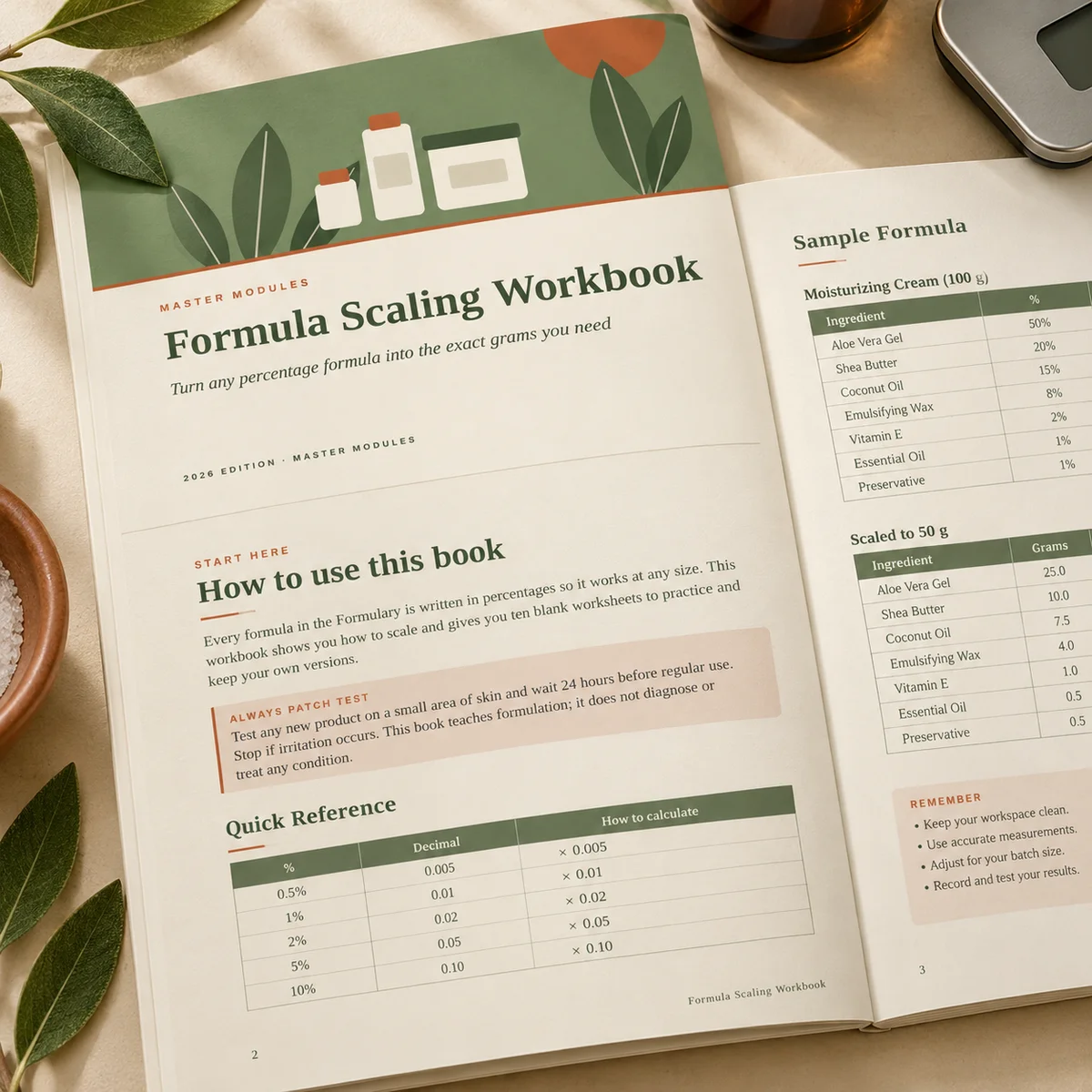
The cost of a batch is the sum of what each ingredient weighs times what it costs per gram, plus the packaging and your time. Because every formula in The Natural Skincare Formulary is written in percentages, you can do this calculation for any batch size in a few minutes. This page shows the method with made-up round numbers, then lists what else belongs in a price, and points to what you must check before selling.
The figures in the worked example are round numbers invented for the arithmetic. Replace them with your own supplier prices.
Step 1: Turn percentages into grams
Grams = percentage × batch size ÷ 100. For the Silky Whipped Body Butter at a 100 g batch:
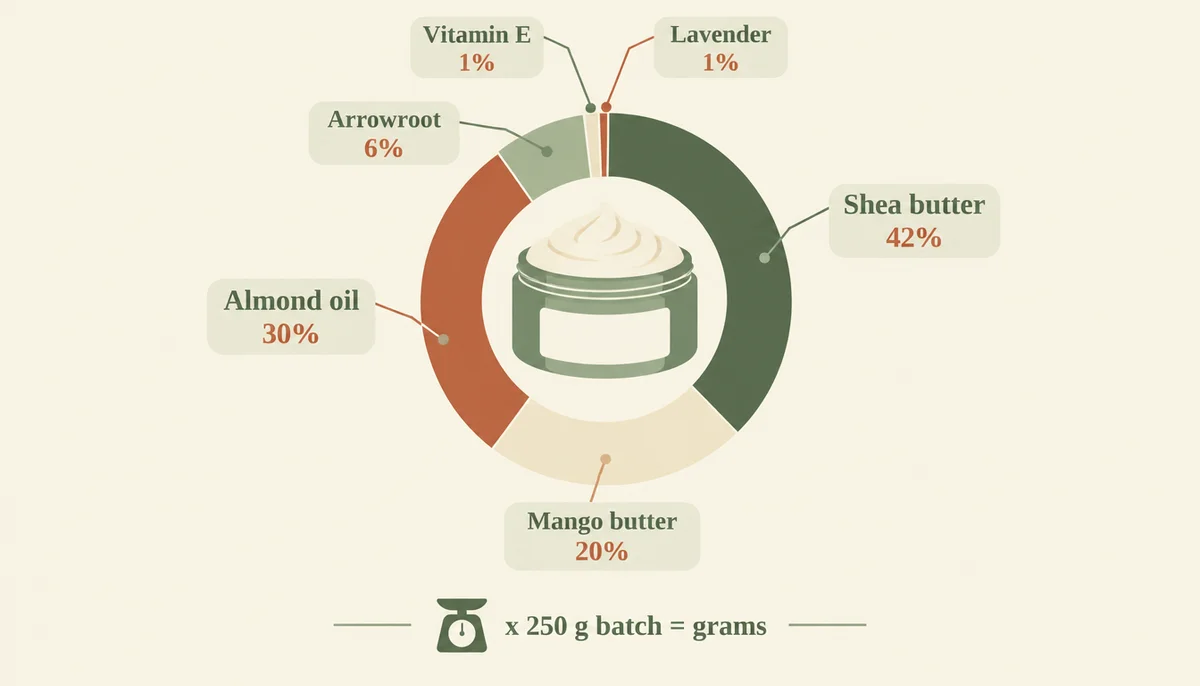
| Ingredient | % | Grams |
|---|---|---|
| Shea butter | 42 | 42 |
| Mango butter | 20 | 20 |
| Sweet almond oil | 30 | 30 |
| Arrowroot powder | 6 | 6 |
| Vitamin E | 1 | 1 |
| Lavender essential oil (optional) | 1 | 1 |
Step 2: Find the price per gram
Divide the price of the pack by its weight in grams. If a supplier sells 500 g of shea butter for 15 units of currency, that is 0.03 per gram. Do this once for every ingredient and keep the figures in a table or your inventory sheet.
Step 3: Multiply and add
| Ingredient | Grams | Price per gram (illustrative) | Line cost |
|---|---|---|---|
| Shea butter | 42 | 0.03 | 1.26 |
| Mango butter | 20 | 0.04 | 0.80 |
| Sweet almond oil | 30 | 0.02 | 0.60 |
| Arrowroot powder | 6 | 0.02 | 0.12 |
| Vitamin E | 1 | 0.10 | 0.10 |
| Lavender essential oil | 1 | 0.30 | 0.30 |
| Ingredients total | 3.18 |
The batch yields about 100 g. In this invented example, the ingredient cost is 0.0318 per gram of finished butter, or about 3.18 per 100 g jar, before packaging.
Step 4: Add everything else
| Cost | How to count it |
|---|---|
| Packaging | Jar or tin, lid, label, box, per unit |
| Waste | Product left on the bowl and spatula, failed batches, test batches |
| Time | Hours per batch times the hourly rate you want to be paid |
| Testing | Test batches and pH strips |
| Storage and shipping | If you ship, include the packing and postage |
| Anything else | Fees, tools that wear out, space |
Write all of it in a batch log. A good record has the lot, date, weights, pH and observations for every batch.
Step 5: Set a price
Price is your cost per unit plus the margin you need, and it should also fit what the market will pay. A simple way to check:
- Cost per unit = (ingredients + packaging + waste) ÷ number of units.
- Add your labour per unit.
- Compare the total with similar products you would actually compete with.
- Decide your margin and check that the price still works.
If you sell through a shop or marketplace, remember that their fees come off your price.
Counting yield, not just batch size
A formula's batch size and what you actually pour are not always the same. The Soft Sugar Body Scrub is written as a 100 g formula and yields about 120 g, while a bath bomb batch of 200 g makes about four bombs of 50 g. Always divide by the units you really fill, and write the real yield in your log after the first batch. If you lose product on the bowl, count that too. A larger batch loses a smaller share of its weight to the bowl and spatula than a tiny one, which is one reason makers scale up recipes they repeat, using the percentages in the formula.
Shelf life changes your plan
Shelf life limits how much you can make at once. A water-free balm is given 6 to 12 months, but a preserved lotion is given 3 to 6 months and a toner 1 to 3 months. Making ten lotions you cannot use or sell within their window wastes money, so match the batch size to how quickly the product will be used. This is also a reason to start with water-free products when you are learning.
Cost-saving without cutting corners
- Scale up only what you repeat. Buy small sizes first and scale up after you know which recipes you will make again.
- Choose recipes that share ingredients, so a few staples cover many formulas.
- Keep the preservative at the supplier's rate. Never cut it to save money.
- Do not skimp on hygiene or testing. A thrown-away batch costs more than a pH strip.
Before you sell anything
This book teaches formulating at home for personal use. Selling cosmetics has legal requirements, such as registration, a safety assessment and labelling rules, and they vary by country. Learn your local rules before selling anything. In the United States, start with the FDA's cosmetics pages and ask a qualified adviser. This page is not legal advice, and it cannot tell you whether you may sell a particular product.
Two things the formulary does cover that you will need regardless:
- A label with the product name, batch number, date made, use-by date, net weight and the full ingredient list in INCI. See the label and batch log guide.
- A shelf-life figure per product, as in how long homemade skincare lasts.
Other tools
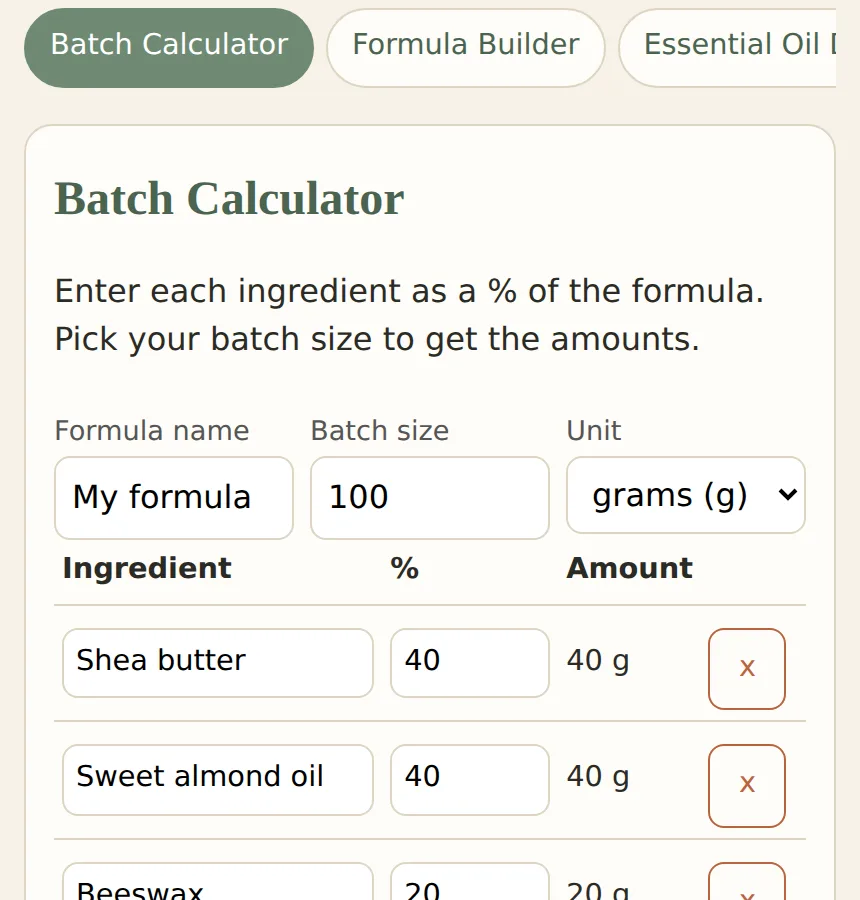
A Maker's Cost & Pricing Spreadsheet is sold separately and is not part of The Natural Skincare Formulary. Inside the formulary, the Formulator's Workbook has formula sheets, batch logs and an ingredient inventory, and the web app has a batch calculator and a batch journal.
Where to start
If you have never made a batch, start with a water-free formula and learn the routine first. DIY skincare for beginners lays out the order. To see everything the book contains, read what is inside The Natural Skincare Formulary.