Skincare Label and Batch Log Template
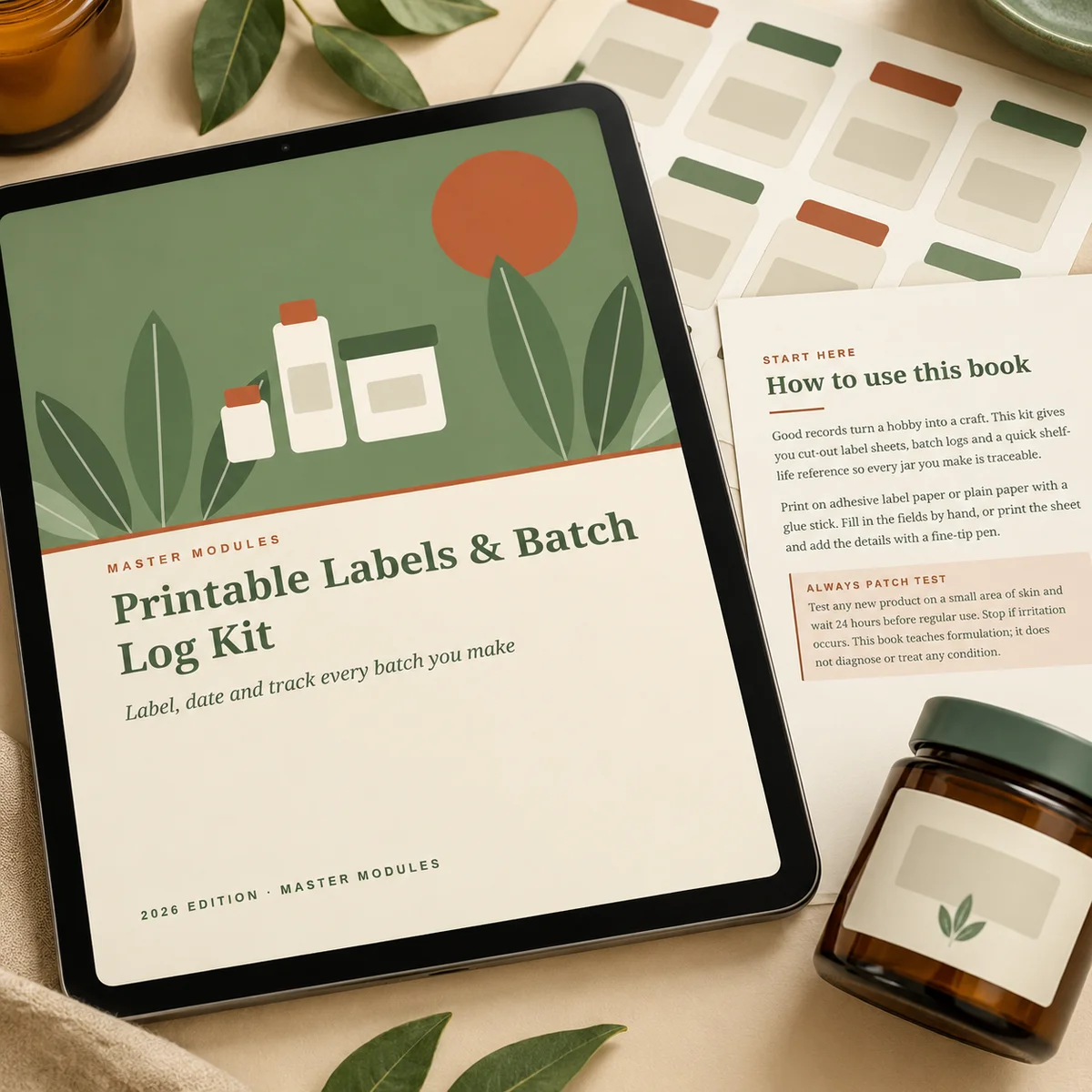
A complete label tells you, and anyone you share a product with, exactly what is inside and when to stop using it. A batch log is the matching record on paper. Together they turn a one-off jar into something you can trace. This page lists what to write, shows an example and gives you a log template to copy.
What goes on the label
| Label element | What to write |
|---|---|
| Product name | A plain description, for example Whipped Body Butter |
| Ingredients (INCI) | List in descending order by weight. Ingredients under 1 % can follow in any order |
| Made on | The date you made it |
| Batch number | A running number from your batch log, for example B-014 |
| Use by | The date you stop using it, based on your shelf-life notes |
| Net weight | Grams or ounces in the container |
| For external use only | Always include it |
| Patch test | "Patch test before first use" |
| Warnings | Keep away from eyes and keep out of reach of children |
The Storage chapter in The Natural Skincare Formulary says the same thing in one line: label every container with the product name, batch number, date made, a use-by date and the full ingredient list in INCI, and add warnings.
Worked example: Silky Whipped Body Butter
The formula has these ingredients by weight: shea butter 42 %, sweet almond oil 30 %, mango butter 20 %, arrowroot 6 %, vitamin E 1 % and lavender essential oil 1 %.
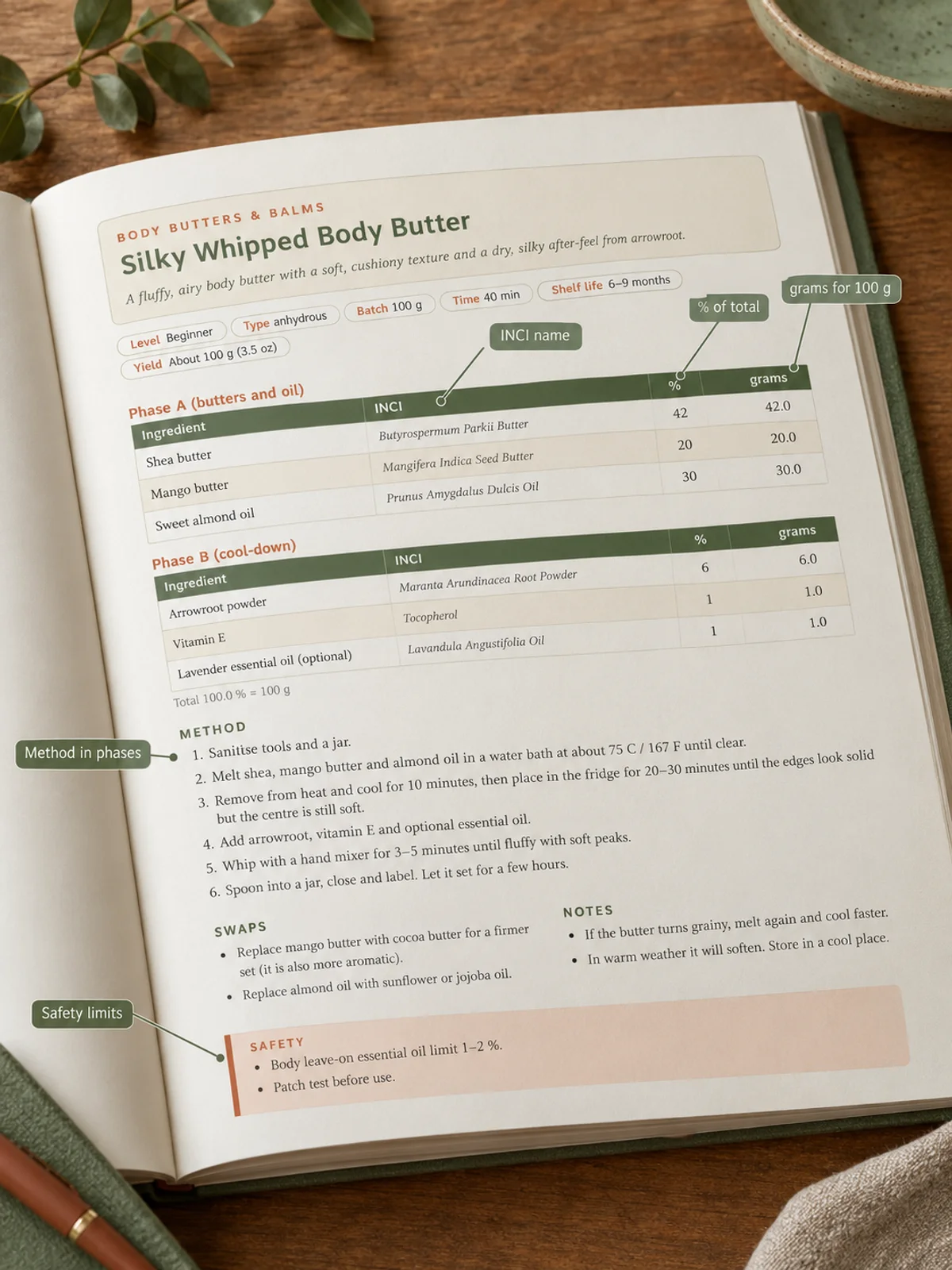
Whipped Body Butter Ingredients: Butyrospermum Parkii Butter, Prunus Amygdalus Dulcis Oil, Mangifera Indica Seed Butter, Maranta Arundinacea Root Powder, Tocopherol, Lavandula Angustifolia Oil Net wt. 100 g (3.5 oz) Made: 2026-10-25. Batch B-014. Use by: 2027-04-25 For external use only. Patch test before first use. Keep away from eyes. Keep out of reach of children.
The last two ingredients are both 1 %, so they can follow in either order. The use-by date here is 6 months after the date made, the low end of the 6 to 9 months planned for this butter.
The batch log
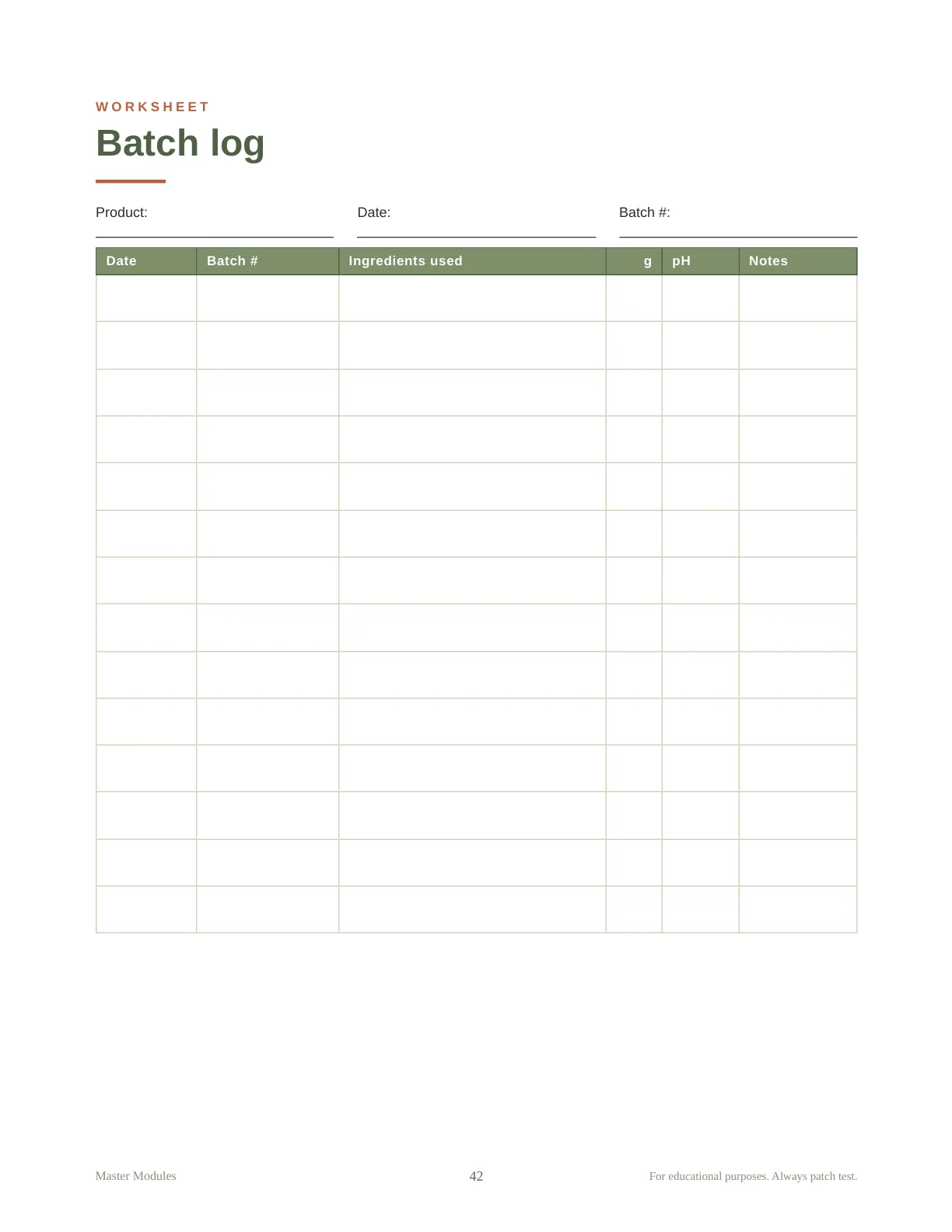
A log is your quality record. The formulary's version asks for the lot, date, weights, pH and any observation. A simple template:
| Field | What to record |
|---|---|
| Batch number | Running number, such as B-014 |
| Product and formula | Name of the recipe and its version |
| Date made | Day, month and year |
| Batch size | Total grams |
| Ingredient weights | Each ingredient in grams, with supplier and lot |
| Temperatures | Phase temperatures and the temperature at which you added the cool-down phase |
| pH | The reading, and the adjuster drops you used (water-based products only) |
| Preservative | Name, percentage and grams (water-based products only) |
| Container | Jar, tube or pump, and size |
| Notes | Texture, scent, what went wrong, what you would change |
| Use-by date | Based on the recipe's shelf life |
Fill it in on the same day, with the label, so nothing depends on memory.
Why one variable at a time
The formulary's troubleshooting rule is to change only one variable per batch, and to write it down. A log makes that possible. When a lotion separates or a balm goes grainy, you can compare it with the batch that worked.
Where shelf lives come from
A label's use-by date should come from the shelf life of that kind of product. The planning ranges in the book are 6 to 12 months for water-free balms, butters and bars, 3 to 6 months for preserved emulsions, and 1 to 3 months for preserved aqueous products. See how long homemade skincare lasts for the table.
If you plan to sell or give products away
Labels for items you sell or give away may need to meet local regulations, and those differ from country to country. Check the rules where you live before selling anything. The business side of batch costs is in what a batch of handmade skincare costs to make, and gift labelling ideas are in homemade spa gifts.
Printable sheets
The Natural Skincare Formulary includes batch log and formula notes worksheets, and the Formulator's Workbook bonus has formula sheets, batch logs, an ingredient inventory and testing notes for Day 1, 7, 14 and 30. The web app adds a shelf-life and label tool and a batch journal. A separate Printable Labels & Batch Log Kit with cut-out label sheets is sold on its own and is not part of the formulary. Here is a free sample of the batch log worksheet from the formulary, ready to print.